Recently, riots in France, Albania, Greece, Italy, and Belgium have been driven by demands for better education, rising living costs, and energy prices outpacing incomes and benefits. Many students and citizens expressed their frustration, making their concerns known to their governments. In researching the French Revolution (1789–1799), I focused on its period of radical political and societal change. Key causes included financial crisis, social inequality, food shortages, and Enlightenment ideas. One notable figure from this era was Abbe Roch-Ambrosie Cucurron Sicard.
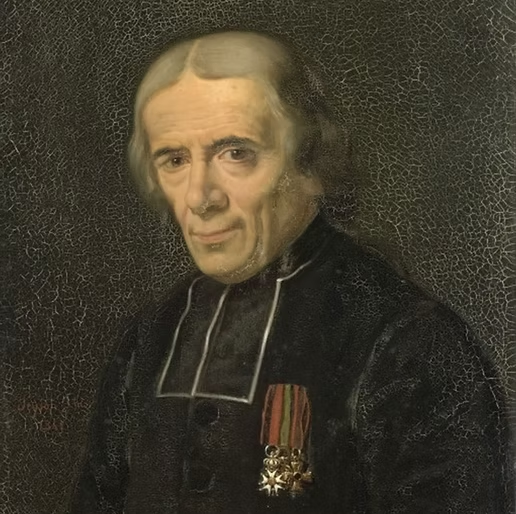
Abbe Roch-Ambrosie Cucurron Sicard was imprisoned in Paris in August 1792 at Abbaye Prison. He narrowly escaped execution twice during the Revolution and collaborated with Jauffret to publish the Religious, Political, and Literary Annals of France. Recognized by the revolutionaries, he was appointed director of the first school for deaf students during the Terror of 1794. He later joined the first École Normale, the National Institute, and the Académie Française. Rising quickly from Toulouse and Bordeaux to Paris, Sicard avoided the guillotine despite his non-conformist views. He is recognized today for developing Enlightenment theories of pantomime, signing, and a form of universal language that later spread to Russia, Spain, and America. https://link.springer.com/book/10.1057/9781137512864
Sicard’s chief works were his Élémens de grammaire générale (1799), Cours d’instruction d’un sourd-muet de naissance (1800), and Traité des signes pour l’instruction des sourds-muets (1808).
Kennedy’s analysis of Sicard’s educational and academic achievements is closely linked to his remarkable survival through the reign of Louis XVII, the Constitutional Monarchy, the First Republic, the Terror, the Directory, the Napoleonic Empire, and the Bourbon Restoration. Sicard emerges as a resourceful figure, adept at survival and self-promotion. As a Jacobin cleric, he never renounced the priesthood and refused the clerical oath of 1791. In September 1792, after his arrest, Sicard was spared execution during the September Massacres by the intervention of a sans-culotte who recognized him as ‘one of the most useful men to his country’ (25). A petition from his students, who called him the ‘father’ of the sourds-muets, also secured his release. Extract from Steven J. Taylor https://www.tandfonline.com/doi/full/10.1080/09687599.2017.1362190
The Survival of a Non-Juror: the Abbé Sicard and the Founding of the National Institute of Deaf-Mutes during the Reign of Terror
By Dr Emmet Kennedy
https://www.laurentclerc.org/about-5-1